Top 10 Men Rain Boots You Need for the Ultimate Wet Weather Protection?
When it comes to wet weather gear, few items are as crucial as quality Men Rain Boots. Mark Thompson, a renowned footwear expert, once said, “The right pair of rain boots can change your entire rainy day experience.” This statement resonates deeply, especially during downpours when staying dry is essential. Men Rain Boots offer not just protection but also comfort and style.
Choosing the right pair can be overwhelming. With countless options on the market, finding boots that truly cater to your needs demands careful consideration. Quality, fit, and functionality should be at the forefront of your decision-making. Yet too often, people overlook these critical factors, opting for trendy choices rather than practicality.
There’s a certain irony in our approach to rainwear. We often view Men Rain Boots simply as a necessary evil rather than an investment in comfort. Each step in a pair of durable, well-designed boots can transform how we navigate wet conditions. Whether for a commute or outdoor adventure, the right boots can make all the difference.
Top Features to Consider When Choosing Men's Rain Boots
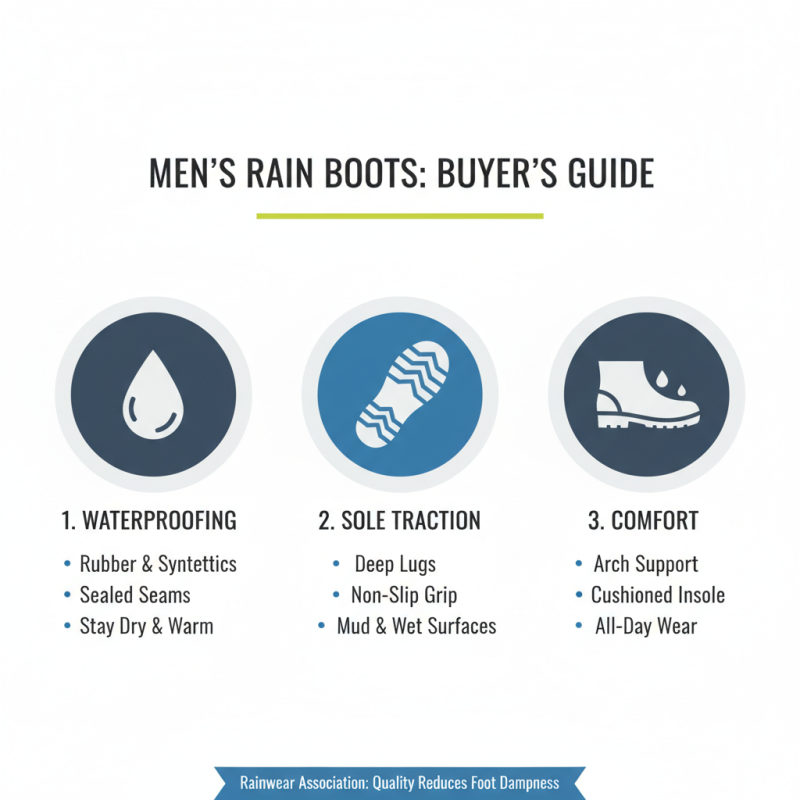
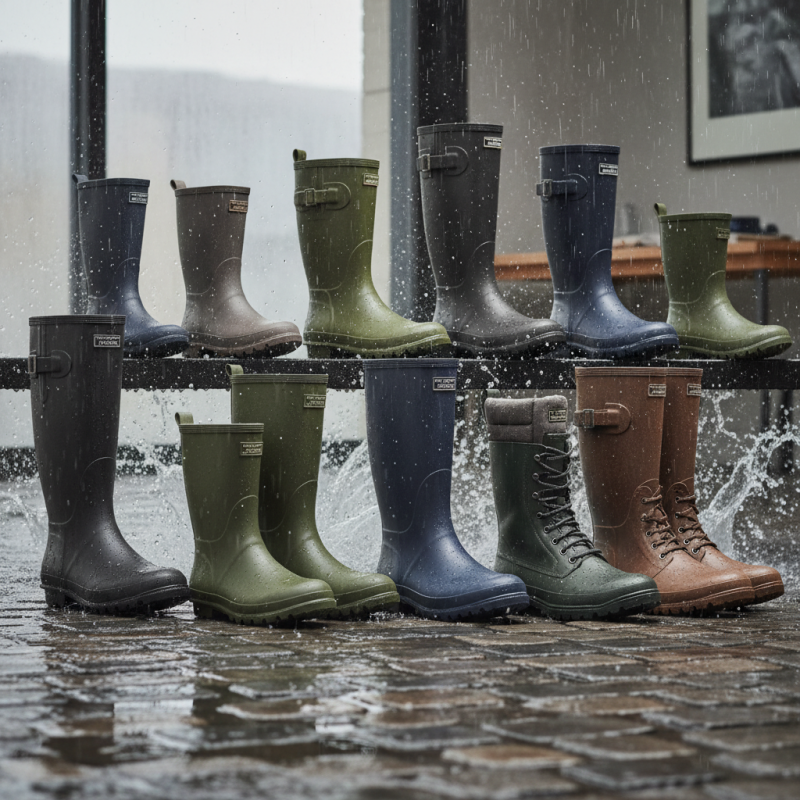
Choosing the right rain boots is essential for men who face wet and unpredictable weather. Top features to consider include waterproofing, sole traction, and comfort. A report by the Rainwear Association indicates that quality waterproofing significantly reduces foot dampness and cold. Look for materials like rubber or synthetic options that offer lasting protection.
Sole traction is critical. Wet surfaces can be slippery. Opt for boots with deep treads to prevent accidents. According to industry studies, boots with enhanced grip can decrease slip incidents by over 30%. Comfort matters too; boots should fit snugly without pinching. Proper insoles can enhance support, making long wear more tolerable.
Tip: Always try on boots with your intended socks. This ensures a good fit while wearing thicker materials. Additionally, consider the height of the boot. Calf-height options keep out splashes, but ankle versions often provide more freedom of movement. Evaluate your needs carefully; sometimes it's worth spending more for the right features.
Material Types: Rubber vs. Neoprene for Optimal Waterproofing
When choosing rain boots, consider the material carefully. Rubber and neoprene are two popular options, each with unique benefits. Rubber is known for its durability. It provides solid resistance against water and mud. Many people appreciate its long-lasting nature. However, rubber might make your feet sweat in warmer weather. This can lead to discomfort during long wear.
On the other hand, neoprene offers flexibility and warmth. It conforms to your feet nicely, preventing chafing. Neoprene can keep your feet cozy in colder temperatures. However, it may not be as breathable as rubber. This could become an issue for some users. Rain boots made from this material can feel a bit constricted over time.
Consider your typical weather conditions. If you face heavy rain year-round, rubber might be the better choice. For those in cooler climates, neoprene could be worth the investment. Finding the right pair might take time. It's essential to assess your needs first. Each material has strengths and weaknesses, urging buyers to reflect on their specific requirements. Selecting the right material can greatly enhance your wet weather experience.
Top 10 Men Rain Boots You Need for the Ultimate Wet Weather Protection
| Boot Model |
Material Type |
Waterproof Rating |
Comfort Level |
Best Use |
| Classic Rain Boot |
Rubber |
High |
Medium |
Daily Wear |
| Neoprene Hiking Boot |
Neoprene |
Very High |
High |
Hiking |
| Gardening Boot |
Rubber |
Medium |
Medium |
Gardening |
| Winter Rain Boot |
Neoprene |
High |
Very High |
Cold Weather |
| All-Purpose Boot |
Rubber |
High |
Medium |
Versatile |
| Tall Waterproof Boot |
Neoprene |
Very High |
High |
Heavy Rain |
| Rubber Chelsea Boot |
Rubber |
Medium |
High |
Casual Wear |
| Lined Waterproof Boot |
Neoprene |
High |
Very High |
Cold & Wet |
| Short Ankle Boot |
Rubber |
Medium |
Medium |
Urban |
| Performance Boot |
Neoprene |
Very High |
High |
Active Adventures |
Sole Design: Importance of Traction in Wet Conditions
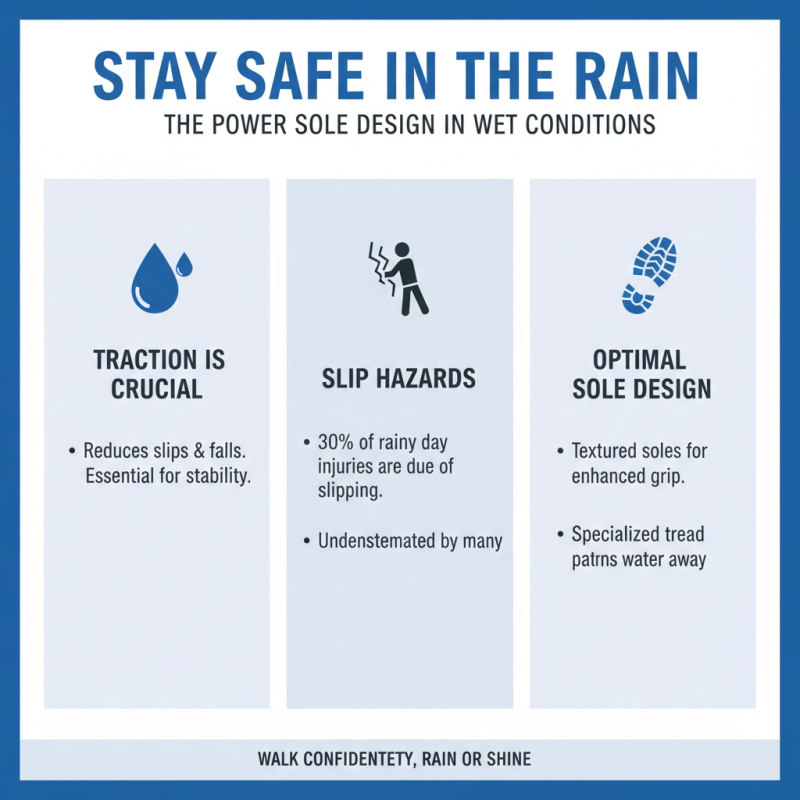
Traction is crucial in wet conditions. Many people underestimate the importance of sole design. A reliable grip reduces slips and falls. According to industry reports, nearly 30% of injuries during rainy weather occur due to slipping. A good rain boot should have a textured sole. This enhances grip on slick surfaces. Specialized tread patterns can channel water away. They help maintain stability, even on soaking wet sidewalks.
In recent studies, it was found that boots with deeper treads perform better on wet surfaces. Their design allows for better water displacement, ensuring maximum contact with the ground. A poorly designed sole can lead to accidents. Most consumers overlook this aspect. Sometimes, aesthetics overshadow functionality. Many boots look great but lack proper traction. Buyers often focus on style rather than safety features.
Wet weather can be unpredictable. Even seasoned individuals can slip if they are unprepared. Thus, investing in well-designed soles makes sense. It can be the difference between a safe step and a fall. Awareness of this can lead to better choices. Checking user reviews on traction can also provide insight. This aspect should not be taken lightly.
Sizing and Fit: Ensuring Comfort and Preventing Water Ingress
When choosing rain boots, sizing and fit are crucial. A perfect fit keeps your feet comfortable during long wear. Too tight, and you risk blisters. Too loose, and water can sneak in. It’s a delicate balance. Many overlook the importance of wearing the right socks when trying on boots. Thick socks can alter the fit significantly.
Measuring your foot properly is essential. Stand on a piece of paper and trace around your foot. Then, measure the outline. Often, people underestimate their size. Once you have your measurements, consult sizing guides. Consider the boot’s intended use. You may want more room if you plan on wearing thick socks. Remember that some styles sit higher on the leg. This can affect how snug they feel.
Trying boots on is best done at the end of the day. Your feet tend to swell slightly when standing. It’s not always convenient, but it’s worth the effort. Walk around in the boots and check for any pressure points. Pay attention to how they feel after a few minutes. Small adjustments can make a big difference.
Durability Statistics: Average Lifespan of Quality Rain Boots
When searching for quality rain boots, durability is a key factor. Many people expect rain boots to last through multiple wet seasons. However, the average lifespan of quality rain boots ranges from one to five years. This variance depends on materials, usage, and care. For those in soggy climates, daily wear can quickly wear down even the toughest boots.
Good rain boots should withstand harsh conditions. With proper care, they might last longer. Some users forget to clean and store their boots correctly. Over time, dirt and moisture can degrade materials. This neglect can lead to cracks and leaks. A boot that shows signs of wear might not provide adequate protection.
Choosing the right pair is crucial. Look for robust materials and solid construction. Pay attention to the sole, as a good grip is essential on slippery surfaces. Users often overlook comfort, but a proper fit reduces blisters and foot fatigue. Ultimately, investing in quality rain boots pays off over time. With the right care and attention, they can provide reliable protection for years to come.