2026 Top Low Work Boots You Need to Know About?
As the demand for safety and comfort in the workplace rises, Low Work Boots have gained immense popularity. According to a recent industry report by Safety Footwear Insights, the global market for low work boots is projected to grow by 5% annually. This growth reflects a shift toward specialized footwear that provides both protection and versatility. Industry expert John Taylor, a renowned safety footwear consultant, states, "Low Work Boots prioritize comfort and safety, essential for modern workplace demands."
The landscape of work footwear is changing. Workers are no longer satisfied with heavy and cumbersome boots. They seek lightweight options that do not compromise safety. Low Work Boots are designed to meet these specific needs, offering features like slip resistance and waterproof materials. However, not all options on the market provide the same level of quality. Consumers must be cautious about choosing brands that prioritize aesthetics over functionality.
In a world that increasingly values safety and efficiency, understanding the right Low Work Boots is crucial. Some might settle for less, missing out on crucial protective features. Reflecting on the importance of investing in quality footwear can make a significant difference in daily comfort and safety.
Essential Features of Low Work Boots for 2026
When searching for the perfect low work boots in 2026, essential features become crucial.
Comfort is at the top of the list. You’ll want boots with cushioned insoles.
A well-padded collar adds support. Look for a lightweight design. This feature often gets overlooked. Heavy boots can lead to fatigue.
Safety is another key aspect. Slip-resistant outsoles help prevent accidents.
Steel toe caps offer extra protection against impacts.
Breathable materials keep your feet dry. Poor ventilation can lead to discomfort. Durability is vital too; quality boots last longer, saving you money.
Fading or creasing over time shouldn’t be acceptable.
Don’t forget to consider fit. A snug fit around the heel prevents blisters. However, you must avoid overly tight footwear.
Room for toe movement is essential yet often neglected. It's easy to ignore these details in a hurry.
Take your time. Choose wisely for your future comfort and safety on the job.
Top Brands to Consider for Low Work Boots
When searching for low work boots, consider various brands that stand out. These brands focus on comfort, durability, and safety. Look for features like slip-resistant soles and reinforced toes. Some offer waterproof materials, which is essential for wet environments. Many users appreciate lightweight designs that do not compromise protection.
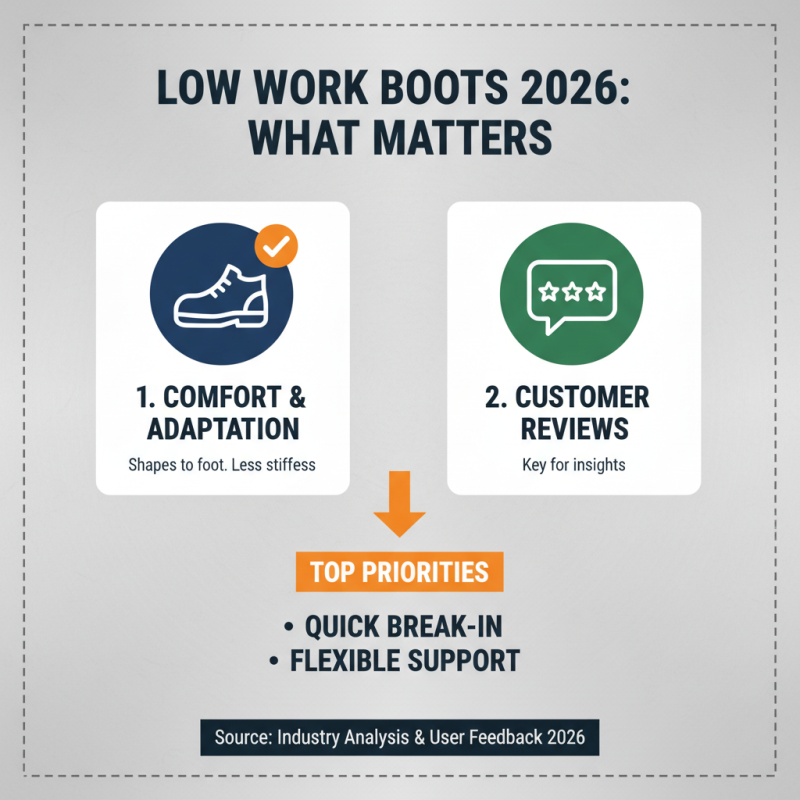
Some brands may provide excellent support, but their sizes may be inconsistent. Always check reviews for sizing tips. Read about people’s experiences to ensure a suitable fit. Additionally, some boots may have a break-in period, which could affect comfort initially. It’s worth investing time to find the right pair.
Price can vary widely among brands. Sometimes, cheaper options may lack durability. Reflect on how often you wear your boots. Are you working in tough conditions? If so, it may be better to spend more upfront on quality. Different brands cater to different needs, so research extensively before making a decision.
2026 Top Low Work Boots Features Comparison
This chart displays the average ratings for key features of low work boots for 2026. The features compared include Comfort, Durability, Slip Resistance, Waterproof, and Breathability, showcasing which aspects consumers prioritize the most in selecting their work boots.
Popular Materials Used in Low Work Boot Construction
When choosing low work boots, materials play a crucial role in performance and comfort. Commonly used materials include leather, synthetic blends, rubber, and specialized composites. Leather remains a favorite due to its durability and natural moisture-wicking properties. According to the Footwear Research Institute, leather can last twice as long as synthetic materials when properly maintained. However, it can be heavy and less breathable.
Synthetic materials are increasingly popular in low work boots. They are lighter and often allow for better air circulation. These blends are resistant to abrasions and can offer water resistance at lower costs. A study by the National Safety Footwear Association highlights that boots made from synthetic materials reduce foot fatigue during long shifts. However, some workers find these boots lack the robustness of leather, which raises questions about their long-term durability.
Rubber soles provide excellent traction, essential for slippery environments. Yet, they can wear down faster than other materials. Composites combine various elements, offering unique benefits, but they sometimes fall short on wear resistance. Each material has its pros and cons, leaving room for exploration. Understanding these factors is crucial for making informed decisions that align with specific job requirements.
2026 Top Low Work Boots You Need to Know About? - Popular Materials Used in Low Work Boot Construction
| Boot Name |
Material |
Weight |
Water Resistance |
Price Range ($) |
| Model A |
Leather / Synthetic |
3.5 lbs |
Yes |
150 - 180 |
| Model B |
Aluminium Toe / Textile |
2.8 lbs |
Yes |
120 - 160 |
| Model C |
Nubuck Leather |
3.0 lbs |
No |
100 - 140 |
| Model D |
Synthetic Leather |
2.5 lbs |
Yes |
90 - 130 |
| Model E |
Full Grain Leather |
4.0 lbs |
Yes |
160 - 200 |
Safety Standards and Certifications for Low Work Boots
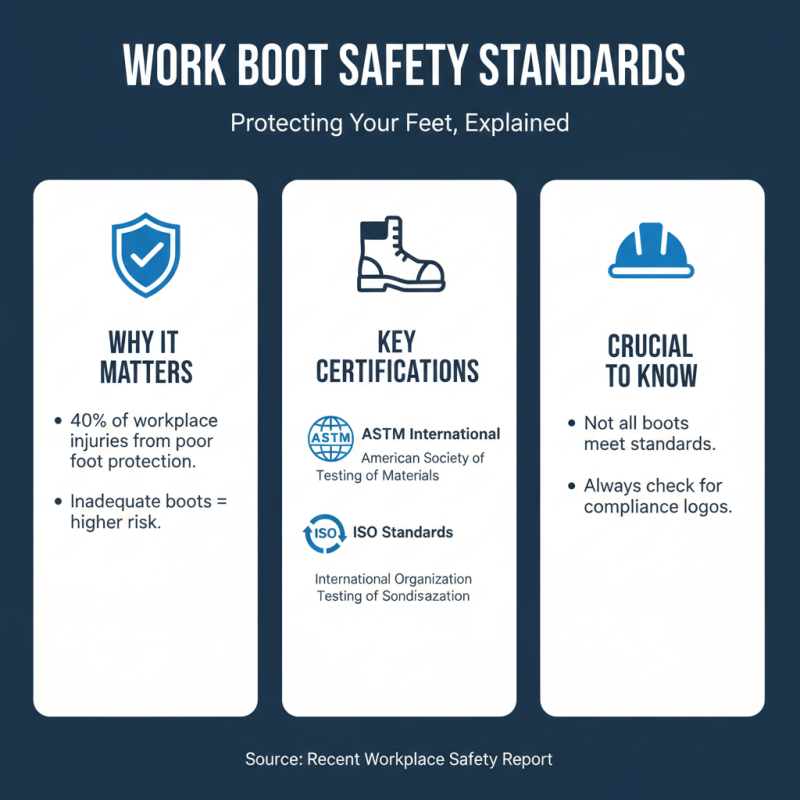
When selecting low work boots, understanding safety standards is crucial. Not all boots meet the necessary criteria. Popular certifications include ASTM and ISO. The American Society for Testing and Materials (ASTM) sets guidelines for protective footwear. According to a recent report, about 40% of workplace injuries stem from inadequate foot protection. This data underscores the importance of compliant boots.
Testing and certifications focus on shock absorption and slip resistance. For instance, boots that satisfy ASTM F2413 standards reduce impact risks. Studies show that slips account for nearly 30% of workplace accidents. Wearing certified low work boots can significantly reduce this risk. Yet, many workers remain unaware of certification specifics, leading to potential safety lapses.
It's essential to periodically reassess your gear. Wearing boots that don’t align with safety standards can jeopardize your well-being. Many employees overlook this aspect. They may prioritize comfort over protection, risking injury. Awareness is key. Employers should encourage training on boot standards. Proper education can foster a safer work environment.