What is a Low Work Boot and Why is it Essential for Safety?
Low Work Boots play a crucial role in workplace safety. They are designed to provide comfort and protection in various environments. According to the Bureau of Labor Statistics, nearly 70% of workplace injuries involve footwear deficiencies. A proper boot can prevent slip-and-fall incidents, which account for a significant percentage of these injuries.
These boots are typically lighter and more flexible than traditional heavy-duty options. This design enhances mobility, making it easier for workers to navigate challenging terrains. For instance, industries like construction and warehousing report a higher rate of injuries among those who wear inappropriate footwear. Low Work Boots address this issue by offering essential features like slip resistance and steel toe protection.
However, there is often a lack of awareness about the importance of appropriate footwear. Many workers choose style over safety, leading to increased risks. Reflecting on this, it's essential to prioritize safety over aesthetics. Embracing Low Work Boots can significantly reduce accidents and foster a safer working environment.
Definition of Low Work Boots and Their Features
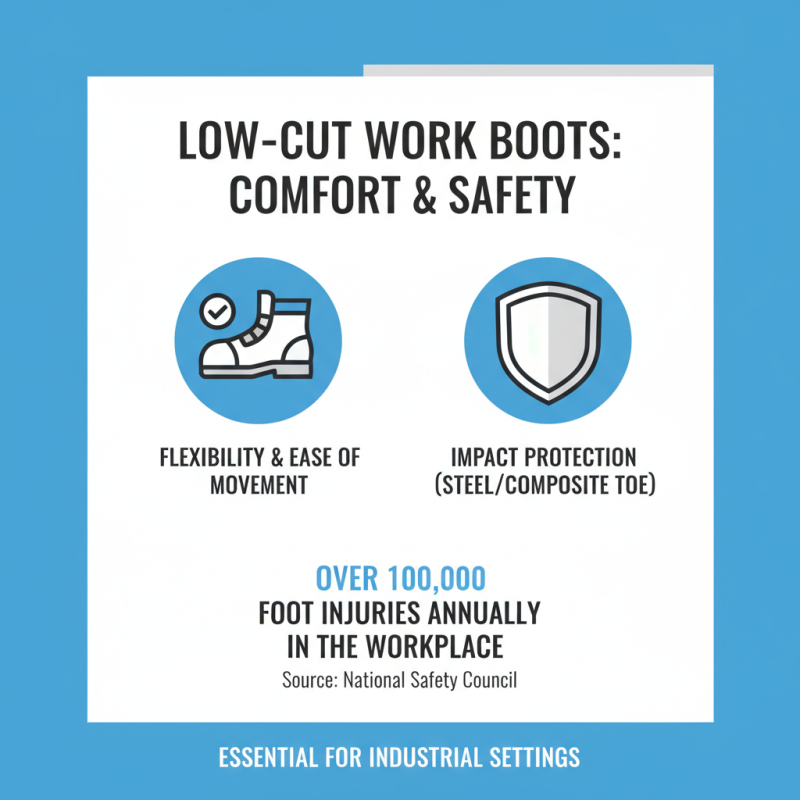
Low work boots are designed for comfort and safety in industrial settings. These boots typically feature a low-cut design, offering flexibility and ease of movement. The construction materials often include steel or composite toes, offering necessary protection against impact. According to the National Safety Council, over 100,000 foot injuries occur annually in the workplace, highlighting the importance of appropriate footwear.
The key features of low work boots include slip-resistant soles and electrical hazard protection. A good pair helps prevent slips and falls, which account for 15% of all workplace injuries. Many boots are also waterproof, keeping feet dry in wet conditions. However, not all workers prioritize fit and comfort, often leading to blisters and fatigue.
Tips: Always try boots before purchasing. Walk around to assess comfort. It’s important to replace worn-out boots regularly to maintain protection and support. Not paying attention to fit can cost you more than you realize. Your safety should always come first.
Importance of Low Work Boots in Various Work Environments
Low work boots play a crucial role in various work environments, particularly where safety is a priority. In warehouses, for instance, workers often face heavy objects. A sturdy boot can protect their feet from potential injuries. Lightweight but durable materials ensure comfort while maintaining safety standards.
In construction sites, low work boots can prevent slips and falls. These boots often feature slip-resistant soles, aiding grip on uneven surfaces. However, not all boots are made for every task. Workers might overlook the importance of proper fit. An ill-fitting boot can lead to discomfort and even affect job performance.
In different settings, a worker's mobility is vital. Low work boots provide necessary flexibility without compromising safety. They are manageable for long hours. Yet, many may not realize the diversity of options available and choose the first pair they see. This approach can result in subpar choices. Proper selection ensures better protection and comfort on the job.
Benefits of Low Work Boots for Foot Safety and Comfort
Low work boots are often overlooked, but they play a crucial role in ensuring foot safety and comfort. According to the Occupational Safety and Health Administration (OSHA), approximately 100,000 workplace injuries each year are foot-related. Low work boots can minimize these risks significantly. They provide essential protection against punctures, slips, and impacts while maintaining flexibility. Many models include steel toes or composite materials that shield feet from heavy objects.
Comfort is another vital aspect. A report from the National Safety Council shows that comfortable footwear can reduce fatigue by 26%. Low work boots are designed with cushioning and arch support, which allow workers to stay on their feet longer. Many workers report less pain and discomfort at the end of their shifts. However, not every pair of low work boots fits perfectly; workers must choose wisely and occasionally reassess their footwear needs. The right fit can prevent blisters and discomfort, further enhancing safety and productivity.
Monitoring the condition of work boots is just as important. Regular inspections for wear and tear can lead to better foot protection. A worn-out boot can fail to provide the necessary safety features. Buying low work boots is not just a choice; it’s about investing in health and well-being. For many, it's a basic but essential component of their safety gear.
Key Safety Standards and Certifications for Low Work Boots
Low work boots are crucial in many workplaces. They offer protection while maintaining flexibility. Understanding safety standards for these boots is essential for ensuring worker safety.
Footwear must meet specific safety certifications. For instance, ASTM (American Society for Testing and Materials) standards address slip resistance and puncture protection. According to industry reports, nearly 40% of workplace injuries involve foot injuries. This statistic emphasizes the importance of certified low work boots. Many boots also feature steel toes for added protection against heavy objects.
Choosing boots that meet these safety standards is vital. Inadequate footwear can lead to accidents. In some cases, injuries from improper footwear can take months to heal. Focusing on quality and safety certifications can prevent these situations. Remember that comfort is equally important. Workers need reliable boots for long hours on the job. Investing in proper footwear is investing in safety.
Factors to Consider When Choosing the Right Low Work Boot
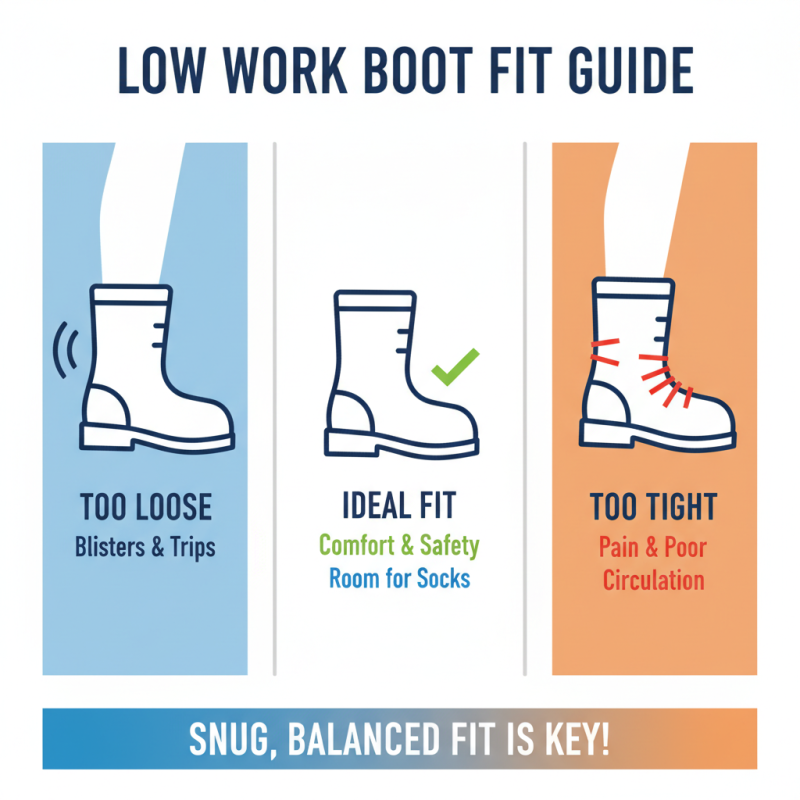
When selecting a low work boot, it’s vital to consider the fitting. A snug fit ensures better comfort and safety. Boots that are too loose can lead to blisters or trips. On the other hand, overly tight boots can cause pain and restrict circulation. Find a balanced size that allows room for socks but not too much movement.
Next, pay attention to the materials used. Leather is durable and waterproof, but not always breathable. Look for options with moisture-wicking linings to keep your feet dry. Also, check the sole. Rubber grips well on various surfaces. Choose a lightweight sole for all-day comfort, but ensure it meets safety standards for your job.
Lastly, consider the weight of the boots. Lightweight boots can prevent fatigue during long shifts. However, ensure that they still provide robust protection. Reflect on your work environment and potential hazards. The right low work boot should feel like an extension of your foot, not a burden.