How to Choose the Best Safety Boots for Your Job Needs?
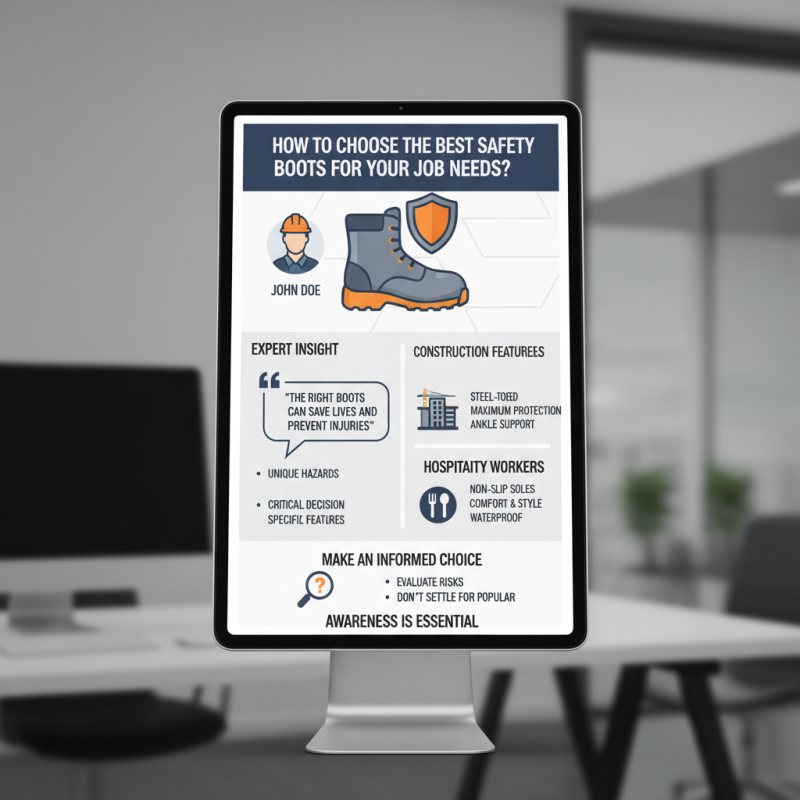
When it comes to workplace safety, the importance of choosing the right safety boots cannot be overstated. Experts in the Boots Safety industry, like John Doe, emphasize, “The right boots can save lives and prevent injuries.” Every job has unique hazards. Selecting the appropriate footwear can be a critical decision.
With various options available, the choices might seem overwhelming. Each profession requires specific features, such as ankle support, slip resistance, and waterproof materials. For instance, construction workers might need steel-toed boots for maximum protection. On the other hand, hospitality workers may prioritize comfort and style with non-slip soles. Ignoring these details can lead to serious consequences.
Understanding your work environment is key to making an informed choice. Evaluate the risks involved in your job. Identify what your boots must offer. Sometimes, people settle for a popular brand instead of what suits their needs. This can be a costly mistake. In the realm of Boots Safety, awareness is essential for safeguarding yourself at work.
Understanding the Different Types of Safety Boots Available
When it comes to safety boots, understanding the different types available is crucial for your work environment. There are many options, each designed for specific needs.
Steel-toe boots are popular in construction and industrial settings. They provide excellent protection against heavy objects. However, they can be heavy and uncomfortable for prolonged wear.
Another option is composite-toe boots. They are lighter and often more comfortable. However, they may not offer the same level of protection in all scenarios. Remember, the best choice depends on your job.
Do you need waterproof boots? Many workers face wet conditions that require extra protection. Non-slip soles are also essential for those who work in slippery environments.
Evaluating your specific work conditions is key. Some boots may not hold up well under extreme temperatures. Others could wear out faster due to harsh conditions. Take the time to assess your daily tasks. Consider all factors, like comfort, weight, and material. A little reflection can help you select the right pair. It’s a balance between safety and comfort. Ultimately, making an informed choice can enhance your performance.
Identifying Your Job-Specific Safety Requirements
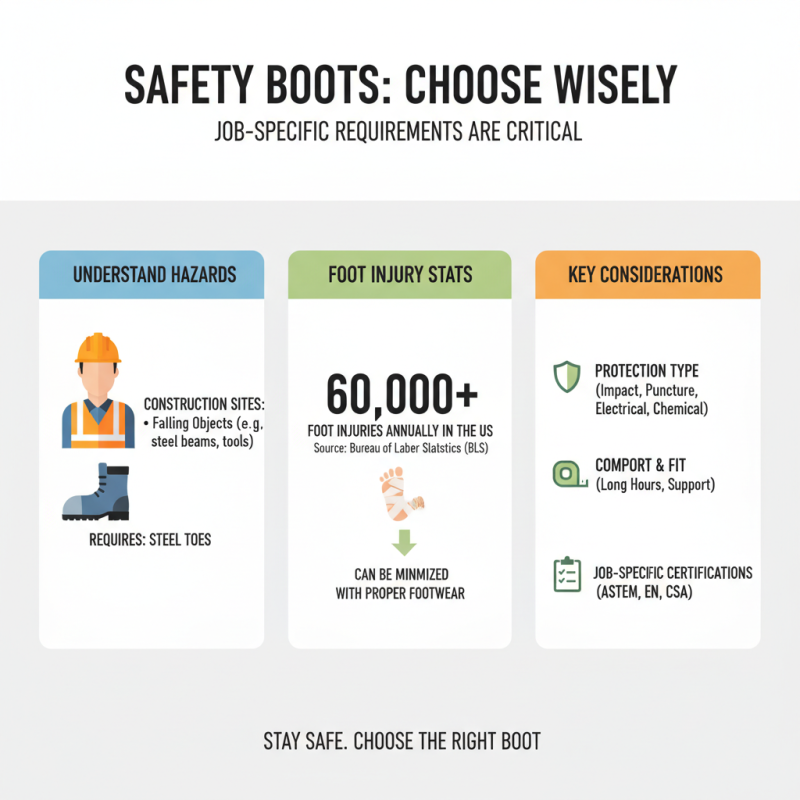
When selecting safety boots, understanding job-specific requirements is critical. Different workplaces impose varied hazards. For instance, construction sites often require boots with steel toes to protect against falling objects. According to the Bureau of Labor Statistics, over 60,000 foot injuries occur annually in the U.S. These injuries can be minimized with proper footwear.
In environments with wet surfaces, slip resistance is crucial. The American National Standards Institute emphasizes that boots must meet specific slip resistance testing standards. The right grip can prevent falls, which are one of the leading causes of workplace injuries. Some individuals overlook this factor until it's too late. The consequences can be severe, leading to lost workdays and medical expenses.
Moreover, temperature and electrical hazards often go unconsidered. Boots should offer insulation for cold conditions or meet electrical hazard standards in certain industries. Various reports indicate that non-compliance with these safety measures can increase accident rates. Employees sometimes resist investing in specialized footwear, prioritizing comfort over safety. Ultimately, addressing these needs prevents avoidable injuries and ensures a safer working environment.
Evaluating Safety Standards and Certifications for Footwear
When selecting safety boots, understanding safety standards is crucial. Various certifications ensure footwear meets specific protection levels. In the U.S., standards set by ASTM International are widely recognized. These standards focus on slip resistance, electrical hazard protection, and impact protection. Shoes meeting ASTM F2413 requirements provide a baseline for safety.
One significant report from the Bureau of Labor Statistics indicates that foot injuries account for a substantial percentage of workplace injuries. Choosing the right safety boots can significantly reduce this risk. Look for boots with steel or composite toes for superior protection. Ensure they have slip-resistant soles to prevent accidents on various surfaces.
Tip: Always check for the safety certification on your boots. This ensures they meet the appropriate standards for your specific job environment.
The complexity of safety standards can be overwhelming. Not all boots are created equal, and some may appear protective without fulfilling key criteria. Regularly review the latest industry reports to stay informed about the evolving standards. It may also help to discuss your safety needs with colleagues. Their experiences might provide insights into the best options available.
How to Choose the Best Safety Boots for Your Job Needs?
| Feature |
Description |
Safety Standards |
Ideal For |
| Steel Toe |
Provides protection against heavy objects. |
ASTM F2413-18 |
Construction, Manufacturing |
| Slip Resistant |
Minimizes the risk of slipping on wet surfaces. |
ASTM F2913 |
Food Service, Hospitality |
| Electrical Hazard |
Provides protection from electrical hazards. |
ASTM F2413-18 EH |
Electrical Work, Utilities |
| Waterproof |
Keeps feet dry in wet conditions. |
No specific standard |
Outdoor Work, Wet Environments |
| Thermal Insulation |
Keeps feet warm in cold conditions. |
No specific standard |
Outdoor Work, Winter Environments |
Assessing Comfort and Fit for Long Hours of Wear
When selecting safety boots, comfort and fit are crucial factors. Many workers spend long hours on their feet. The wrong pair of boots can lead to discomfort and fatigue. A snug fit is essential. This prevents blisters and unnecessary movement. Pay attention to the width and arch support. These are key features for comfort.
It's important to try on the boots. Walk around the store to see how they feel. Sometimes, boots may seem comfortable at first glance, but will not be ideal after several hours. Consider how your feet swell during the day. Choosing boots that accommodate this is wise. If the fit doesn’t feel right, it can lead to long-term issues.
Don’t overlook socks either. The right socks can enhance comfort dramatically. Opt for moisture-wicking materials. They help keep your feet dry. Remember to assess the weight of the boots. Heavier boots can cause fatigue, especially if worn all day. Finding the right balance between protection and comfort takes time and thought. Your feet deserve the best.
Considering Additional Features for Enhanced Protection and Usability
When selecting safety boots, additional features can greatly impact your comfort and protection. Look for boots with slip-resistant soles. This feature is crucial for jobs in wet or oily environments. A lightweight design can also enhance usability, making it easier to move around.
Consider waterproof materials, especially for outdoor work. They help keep your feet dry and comfortable. Extra cushioning in the insoles can boost all-day comfort. Steel toe caps provide added protection against heavy objects. However, they may add weight, which could be a factor for longer shifts.
Don't forget to assess breathability. Poor ventilation can lead to discomfort and sweat buildup. Some boots may look great but lack this essential feature. Lastly, pay attention to the fit. A bad fit can lead to blisters or strain, detracting from safety. Balancing protection and comfort is key.